

Meet Norm Jacobs, a champion of durable dwarf cultivars for urban gardens (a 2024 PlantFest speaker)
Dawn Redwoods (Metasequoia glyptostroboides) and Giant Redwoods (Sequoiadendron giganteum) were native to the Pacific Northwest before the last Ice Age. Though now considered endangered in the wild, they have demonstrated adaptability to a range of urban sites, soils, and moisture levels. At PlantFest Norm will cover the differences between the species' tolerance of challenging conditions. There will be a discussion of the availability of their dwarf and unusual conifer cultivars which present interesting and attractive options for the home gardener with the hotter and drier summers we are experiencing with climate change. Norm will also discuss how he and wife Deb have artfully incorporated these trees into their garden. He is one of three speakers who will be presenting at PlantFest in 2024. Do you have your tickets yet to this speaker event? Get them now here!
Norm, you've opened your garden with the HPSO Open Gardens program, but for those who haven't had the pleasure ... tell us about the type of garden you have.
I have a woodland garden consisting of an overstory of mid-sized trees (primarily Japanese maples); a mid-story of dwarf conifers, species Rhododendron, and other woody shrubs; and an understory of Epimedium, ferns, trillium, terrestrial orchids, and other woodland perennials. It is laid out as a Japanese-style strolling garden and doubles as our test-bed for new plant introductions.
Speaking of new plant introductions ... what is your next garden project?
I'm wanting to build a crevice garden. I have been working with a group of Cypripedium hybrids (Lady Slippers) from a German nursery.
That sounds exquisite! Can you also share a genus or group of plants that you are newly excited about?
Well, I'll have to refer back to the Cypripedium. I went on an HPSO tour to Scandinavia in 2022 and was inspired by the plants I saw there. I purchased a few at HPSO's spring plant sale -- Hortlandia -- a few years ago and was very encouraged by the success.
Do you have a favorite plant for dry shade?
Epimedium selections and hybrids of plants originating in the dry climates of the western silk road (SE Europe to western China).
Have you noticed any changes in gardening trends in the PNW over the last 20-30 years?
So many. We're seeing a changing plant palette driven by a changing (hotter and more turbulent) climate. The development of an inclusive study of soil, including microbes, fungus, insects, etc. "Soil Science" as a scientific study barely existed prior to the 1990s.
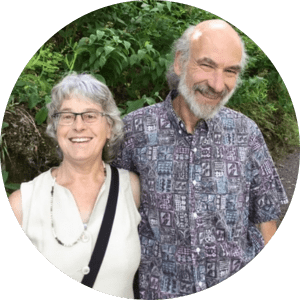
Norm Jacobs learned gardening at his grandmother’s knee, trimming boxwood, pruning roses, and tending the vegetable garden. After studying math and physics at UC Berkeley, Norm became involved in public “pension” gardens and Alice Waters’ first “edible classroom” just a few doors down from him, when he wasn’t exploring the wonders of the UC Botanical Garden. His botanist partner Deb and he would go on to found Arbutus Garden Arts. Originally starting in Yamhill in the early 1980s, with poor access to water and fertile soil, Deb and Norm moved their nursery operations to Portland for more sun and alluvial soil in 2015. Woodland gardens have been their focus and they are constantly working with overstory, mid-story, and understory to benefit the plants. Having full sun at the fringes and deep dry shade in the depths allows them a full range of plants. As a nursery they specialize in Japanese maples, dwarf conifers, Epimedium, and are flirting with woodland (species) peonies, all of which they propagate from plants that have performed well in their garden.
Related Posts
A Conversation with Loree Bohl: Gardening with Foliage, Containers, and a Touch of Danger (2025 Annual Meeting Speaker)
We’re thrilled to welcome Loree Bohl, Portland gardener, author, and the creative force behind the popular danger garden blog, as
Plant Passion and Fall Color: A Conversation with Lisa Graff of Lux Perennials Nursery
We’re counting down to PlantFest 2025, happening October 4th at Clackamas Community College, and this year, we’re thrilled to welcome
Meet Kevin Philip Williams and Michael Guidi, Authors of “Shrouded in Light”, HPSO Speakers at Revolution Hall on 03/27/2025
HPSO: Hello, Michael and Kevin, so good to have a chance to chat and learn a little more about both